5027 S Commerce Dr
Murray, UT 84107

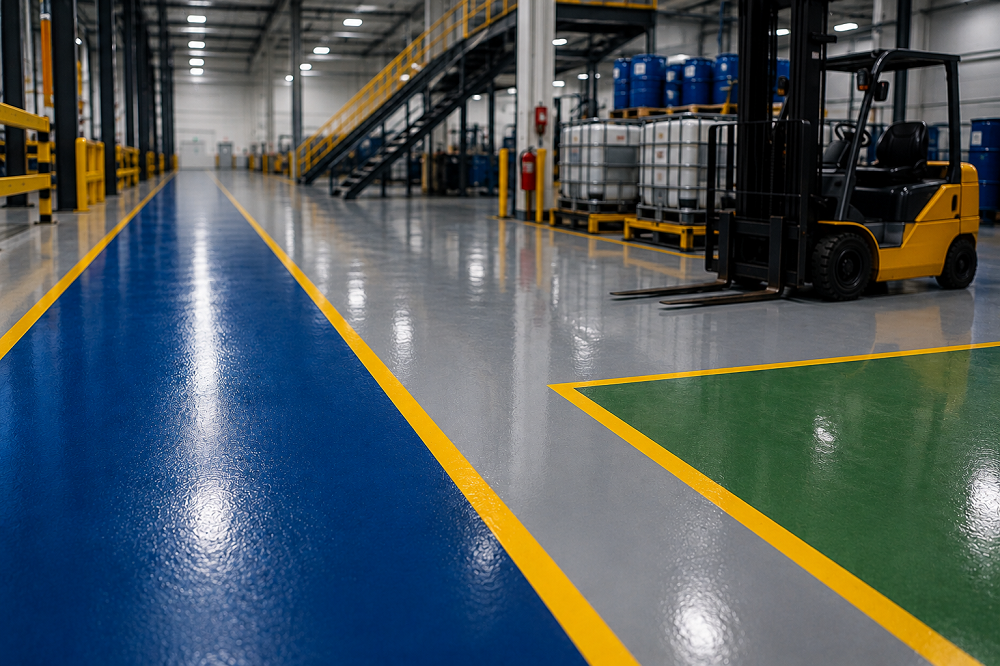
Workplace floors experience constant pressure from employees, vehicles, machinery, spills, and equipment. When a floor becomes slippery, difficult to clean, or visibly worn, it can create unnecessary safety risks for everyone using the facility. Investing in durable commercial floor coatings can help businesses create surfaces that are easier to maintain while improving traction, visibility, and resistance to everyday hazards.
For businesses considering commercial floor coatings in Utah, the benefits extend beyond appearance. A professionally applied coating system can protect the underlying concrete while helping create a cleaner, more organized, and safer working environment.
Slips and falls are common workplace hazards, particularly in facilities where floors may regularly encounter water, oils, cleaning solutions, or other liquids. Bare concrete can become slippery when wet, while worn flooring may lose the texture needed to provide adequate traction.
Commercial floor coatings can be formulated with textured finishes and aggregate materials that increase surface traction. This added texture helps employees maintain their footing in areas where moisture or spills are unavoidable.
Slip-resistant surfaces are especially valuable in manufacturing facilities, warehouses, automotive shops, commercial kitchens, loading areas, and other high-traffic environments. By improving traction, a properly selected coating system can help reduce conditions that contribute to workplace accidents.
However, slip resistance depends on the coating system, surface texture, maintenance, and conditions of the specific facility. A professional assessment can help determine the appropriate finish for the environment.
Workplace safety also depends on how easily employees can see walkways, work zones, equipment areas, and potential hazards. A worn or discolored floor can make these areas harder to distinguish, particularly in busy facilities.
A new commercial coating can create a smooth, uniform surface that improves overall visual organization. Different colors, borders, and markings can also help define pedestrian paths, equipment zones, storage areas, and restricted spaces.
Clearly defined floor markings can encourage employees to follow designated routes and stay separated from areas where forklifts, carts, or heavy machinery operate. A cleaner, more consistent floor can therefore support both safety procedures and facility organization.
Many commercial environments regularly encounter substances that can damage untreated concrete. Oils, fuels, solvents, cleaning chemicals, and other liquids may penetrate porous concrete, causing staining and gradual surface deterioration.
Protective commercial floor coatings create a barrier between the substrate and many common contaminants. Depending on the selected system, coatings can provide resistance to chemical exposure and make spills easier to contain and remove.
This protection is valuable in manufacturing plants, automotive facilities, warehouses, laboratories, maintenance areas, and other workplaces where chemical spills are possible. Preventing contaminants from penetrating the concrete can also make routine cleaning more manageable.
Workplace floors often have to withstand much more than foot traffic. Forklifts, pallet jacks, carts, vehicles, machinery, and other equipment can subject the flooring to repeated impact and abrasion.
Bare concrete may gradually develop surface wear, dusting, chips, and other forms of deterioration under these conditions. High-performance coatings can add a durable protective layer that helps the surface withstand repeated traffic and mechanical wear.
Selecting a coating based on the facility's expected loads and traffic patterns is essential. A coating designed for a light-duty office environment may not provide the performance required in a warehouse or industrial plant. Professional coating specialists can evaluate traffic levels and recommend an appropriate system.
A safer workplace is easier to maintain when employees can quickly identify and clean spills, dirt, and other contaminants. Porous, damaged concrete can trap oils and debris, making cleanup more difficult and allowing stains to accumulate.
Many commercial floor coating systems create smooth or seamless surfaces that simplify routine cleaning. Dirt and spills can often be removed more efficiently than they can from deteriorated concrete, helping facility teams keep floors in better condition.
Regular cleaning also helps preserve traction. Dust, grease, and other buildup can make even a textured surface more hazardous, so a coating should be considered part of an ongoing floor maintenance program rather than a replacement for routine cleaning.
The value of commercial floor coatings goes beyond their initial installation. By protecting concrete from moisture, chemicals, abrasion, and heavy traffic, coatings can help maintain the condition of workplace floors for longer periods.
A durable surface can also reduce the frequency of patching and repairs. Fewer damaged areas mean fewer temporary hazards, while consistent maintenance makes it easier for facility managers to identify problems before they become larger concerns.
Intermountain Coatings provides coating solutions for commercial environments where durability, protection, and surface performance are important. Professional installation can help ensure the substrate is properly prepared, and the selected coating is applied according to the requirements of the space.
Not every commercial facility has the same safety requirements. Before selecting a coating, property owners should consider the types of traffic, chemicals, moisture, equipment, and cleaning procedures the floor will encounter.
Important factors include:
Proper surface preparation is equally important. Removing contaminants, repairing damage, and creating an appropriate bonding profile help the coating adhere effectively and perform as intended.
Workplace flooring plays an important role in protecting employees, equipment, and property. Commercial floor coatings can improve traction, enhance visibility, resist chemicals and abrasion, and make routine cleaning easier. Together, these advantages help businesses maintain safer and more functional working environments.
For companies exploring commercial floor coatings in Utah, Intermountain Coatings can provide professional coating solutions designed around the demands of commercial spaces. Choosing the right system and maintaining it properly can help protect the floor while supporting workplace safety for years to come.
